
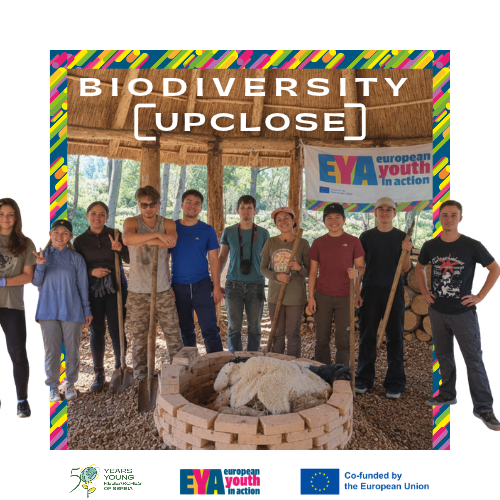
Biodiversity Through Experience: Young Researchers of Serbia Organised Nature Conservation Workshops at Two International Workcamps
How are our everyday choices connected to the health of ecosystems? Why does the disappearance of a single species matter for the natural world as a whole? And what can individuals and communities do to protect biodiversity? Participants explored these questions during two international workcamps organised by Young Researchers of Serbia in the summer of 2025.
The biodiversity workshops took place within the international workcamps “Stories by the Lake”, held in Deliblato from 19 July to 1 August, and “Birds Eldorado”, held in Kupinovo from 17 to 30 August 2025. Through interactive workshops, outdoor activities and open discussions, participants explored the importance of biodiversity, the threats facing natural ecosystems, and opportunities for individuals and communities to actively contribute to nature conservation.
The programme combined non-formal education methods, teamwork, creative exercises and direct experiences in nature. Its aim was to help participants understand how human activities affect biodiversity and how collective action can contribute to the protection of natural habitats.
From Everyday Habits to Ecosystem Consequences
One of the activities, “The Chain of Consequences”, focused on the relationship between everyday behaviour and its wider environmental impacts. Starting with a simple example, such as improper waste disposal, participants explored how seemingly small individual actions can affect human health, biodiversity and tourism.
They discussed environmental challenges affecting the Special Nature Reserve Kraljevac, shared experiences from their home countries and exchanged examples of good practices. The activity demonstrated that nature conservation is closely connected to everyday life and that the consequences of human behaviour often extend far beyond the immediate environment in which they occur.
The Biodiversity Tree: Understanding the Causes and Consequences of Species Loss
During the “Biodiversity Tree Exercise”, participants worked in four groups to explore the endangerment of different species and ecosystems: bees, coral reefs, snow leopards and white-tailed eagles.
Each group created a tree representing the problem of biodiversity loss. The roots illustrated the causes of species endangerment, the trunk represented the consequences of species disappearance, and the crown presented possible solutions. Through this exercise, participants connected habitat destruction and fragmentation, pollution and climate change with their impacts on ecosystems.
The activity encouraged participants to approach biodiversity loss from different perspectives, linking the immediate threats facing individual species with wider ecosystem consequences and opportunities for individual and collective action.
Learning from Nature Through Direct Experience
The “Mini Expedition – Learning from Nature” provided an opportunity to connect the knowledge gained during the workshops with direct experience of the natural environment. Conducted in the Special Nature Reserve Kraljevac, the activity focused on the importance of wetlands and biodiversity.
Through silent observation, reflection, photography and mindfulness exercises, participants explored their surroundings using their senses. This approach encouraged a deeper personal and emotional connection with natural habitats, highlighting the importance of direct contact with nature as part of environmental learning.
From Identifying Challenges to Developing Collective Solutions
Throughout the workshops, participants identified several major threats to biodiversity, including habitat destruction and fragmentation caused by urbanisation, pollution and intensive agriculture, as well as climate change and the excessive use of pesticides and chemicals that threaten species, pollinators and soil biodiversity.
They also highlighted insufficient public awareness, weak enforcement of environmental legislation and the prioritisation of economic interests over nature conservation. Limited community engagement and the loss of traditional knowledge related to ecosystem protection were also raised as important concerns. Participants expressed particular concern about the natural environment that future generations will inherit.
In response, they emphasised the importance of environmental education, responsible everyday choices and active participation in nature conservation. Suggested actions included encouraging young people to volunteer with environmental organisations, establishing local green spaces that support native species, and developing community-led biodiversity initiatives.
Participants also stressed the need for stronger cooperation between civil society organisations, experts, schools, local communities and public authorities. Their recommendations included more effective enforcement of environmental legislation, expanding and improving the management of protected natural areas, promoting sustainable agriculture, and ensuring adequate financial and legal support for biodiversity conservation.
To strengthen future educational activities, participants recommended incorporating more practical conservation actions, such as planting native species and monitoring local wildlife, while supporting youth-led initiatives in schools and communities.
The workshops demonstrated that understanding and protecting biodiversity requires connecting knowledge with experience and turning awareness of environmental challenges into concrete action. Through collaborative learning, the exchange of experiences and direct engagement with nature, participants explored how responsibility for conservation is shared by individuals, communities and institutions.
As Johan Rockström emphasises: “The value of biodiversity is that it makes our ecosystems more resilient, which is a prerequisite for stable societies; its wanton destruction is akin to setting fire to our lifeboat.”
About project
Workshops at international volunteer camps were held as part of the EYA – European Youth in Action project, which aims to empower young people across Europe to participate in discussions and decision-making on issues of climate justice. The project specifically deals with energy transition, greenwashing and biodiversity protection.


